
Balayage vs Ombre: Which One You Are Picturing
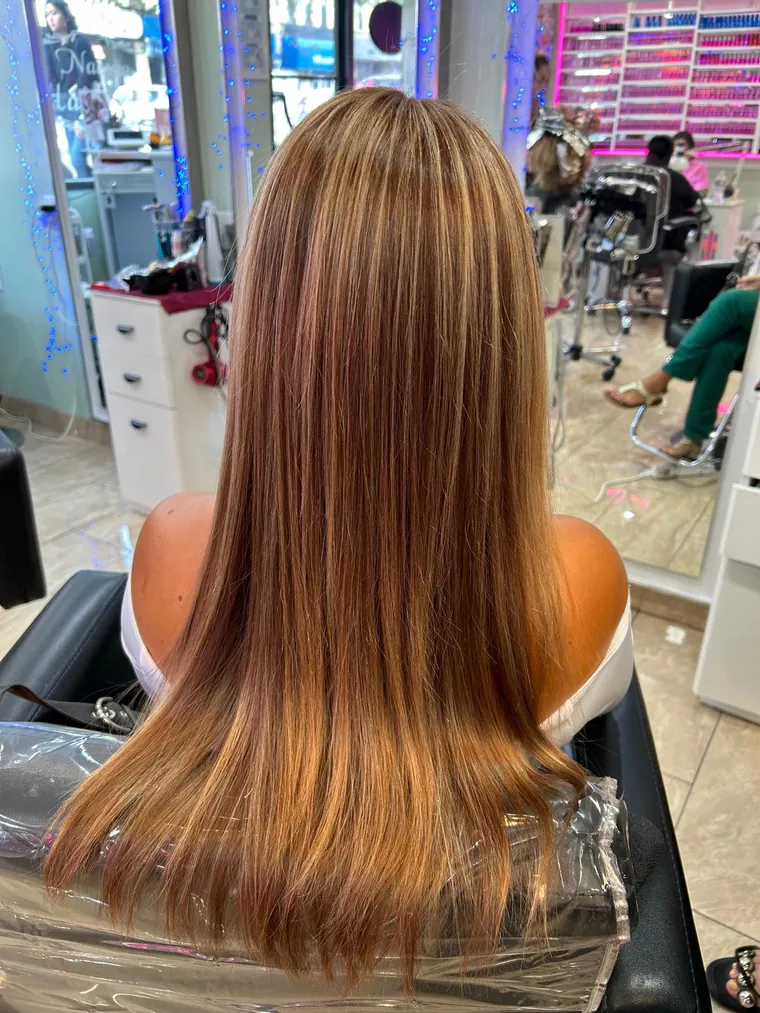
Half the balayage photos saved on phones are actually ombre, and half the ombre requests are really asking for balayage. The two words describe different things, and knowing which one you are picturing saves a long consultation.
Balayage is a technique: lightener painted by hand in soft strokes so light runs through the length of the hair and the natural color stays visible. Ombre is a result: dark at the root, light at the ends, with a clear shift between the two. Balayage looks like dimension; ombre looks like a gradient. Here is how each is done, how each grows out, what upkeep looks like and how to choose at our Astoria hair salon.
The difference in one sentence each
Balayage puts ribbons of lighter color through the hair from somewhere below the root to the ends, so you still see your natural shade everywhere and the light sits on top of it. Ombre keeps the top section fully dark and makes the bottom section fully light, with a blended band in the middle where one becomes the other.
The giveaway is the root. In balayage photos, light pieces start at different heights and some come up near the face. In ombre photos, the whole top of the head is one solid dark color and nothing light reaches it. Look at your saved photo with that in mind and you will usually know which one you want before you sit down.
Both are done with lightener and both are finished with toner, which is why they feel similar in the chair even though they look different on the street.
How each one is done
Balayage is painted freehand. The colorist takes thin sections, sweeps lightener onto the surface of each one, heavier at the ends and feathered toward the root, and lets it process in open air. Every piece is placed by eye, which is why no two balayages look the same and why it depends so much on the colorist's hand.
Ombre
Ombre is applied more systematically. The ends are saturated with lightener, the band where the fade happens is worked with a softer hand so the line blurs, and the root is left untouched or deepened with color to sharpen the contrast. It is often done with foils or film on the ends to push them lighter, since an ombre needs the bottom to be clearly a different color.
Sombre and color melt
Sombre is a soft ombre with less contrast and a longer fade. A color melt is a technique that blends two or three shades so there is no visible line at all, and it is used to soften both styles. If you want the ends light but hate a visible band, ask for a melt.
How they grow out and what upkeep looks like
Both grow out without a hard root line, which is why they beat traditional highlights for low upkeep. Balayage grows out the most gracefully because the light pieces were already scattered at different heights, so a few more inches of root just adds to the blend. Ombre also grows out cleanly, since the root was dark to begin with, but as the hair gets longer the light section moves further down and can start to look like it is sitting at the bottom of your hair.
| Balayage | Ombre | |
|---|---|---|
| What it is | A painting technique | A dark to light result |
| Where the light sits | Through the length, some near the face | Ends only |
| Contrast | Low to medium | Medium to high |
| Root | Natural, light pieces start at varying heights | Solid dark |
| Lightener refresh | Every 12 to 16 weeks | Every 12 to 20 weeks |
| Toner or gloss | Every 6 to 8 weeks | Every 6 to 8 weeks |
| Best on | Any length past the chin, any base | Longer hair, dark to medium bases |
In both cases the thing that fades first is the toner, not the lift. A gloss at six to eight weeks keeps the ends from turning warm and is far cheaper than repainting.
Which hair types and lengths suit each
Balayage works on almost anything past the chin and on every base from black to blonde. On a bob or lob the colorist paints shorter, finer pieces. On curly and coily hair it is painted on the curl pattern so the light lands where the curls catch it, which is harder to do with foils and one reason balayage is the default for textured hair.
Ombre needs length. The fade takes room, and on hair above the shoulders there is not enough hair to go from dark to light without it looking like a stripe. It works best on medium to long hair with a dark or medium base, where the contrast reads as intentional. On already light hair an ombre has nowhere to go, and a reverse ombre, light root to dark ends, is a different request.
Fine hair tends to look fuller with balayage, because the scattered light adds the illusion of depth. Thick, long hair carries an ombre well because there is enough of it to show the gradient.
Cost and time in the chair
Both are priced as their own services on our hair menu, which lists 20 services from $35, and both cost more than a single process color, which is $75, because the colorist is working section by section with lightener and then toning. A haircut and blowout is $55 if you want the shape done in the same visit, which most clients do so the color can be checked on the finished cut.
Ombre is often slightly quicker because the placement is simpler and the root is not painted. A first balayage on dark hair is the longest version of either service, usually two to four hours, so it is booked early; the last hair appointment of the day is 4pm Monday to Saturday. A refresh on either style is shorter because only the mids and ends are touched.
Looks people ask for, and which word to use
Most photos that come in fall into one of a few groups. Here is the word that gets you the look in the picture.
- Dark brown roots fading to honey or caramel ends with a visible shift: ombre, or sombre if the shift is gentle.
- Brown hair with soft blonde ribbons through the length and a brighter piece at the face: balayage.
- Sun streaked beach hair that looks like it happened on its own: balayage, often with a few fine foils at the top.
- Black hair with ash blonde or silver ends and a sharp transition: ombre, usually over two sessions.
- Blonde hair that wants more depth and movement: balayage with lowlights, not ombre.
- Grown out highlights you want to soften instead of redo: a balayage refresh painted through the old line.
If your photo shows a money piece, the bright frame around the face, that is a balayage detail and it can be added to either style.
How to choose before you book
Ask yourself four questions. How much contrast do you want: subtle says balayage, bold says ombre. How long is your hair: above the shoulders says balayage. How often do you want to come in: both are low upkeep, balayage slightly more so. And what does the photo on your phone show at the root: natural with light pieces means balayage, solid dark means ombre.
If you are still unsure, book a consultation and bring the photos. A colorist can usually tell in a minute which one you are picturing and whether your current color, especially old box dye or previous highlights, changes the plan. Color correction is on the menu for hair that needs to be evened out before either look will work. The full list is on our balayage service and the hair menu.
Book balayage or ombre on Steinway Street
Naespa Nails & Beauty is at 32-44 Steinway St in Astoria, Queens, about two minutes on foot from the Steinway St station on the M and R, with free street parking nearby. Hours are Monday to Friday 9am to 8pm, Saturday 9am to 7pm and Sunday 11am to 6pm, and the last hair appointment is 4pm Monday to Saturday. Call (347) 894-6190 with questions.
Color is done by licensed stylists with professional grade products. Both services are long appointments, so book online with your photos ready. Prices for balayage, glosses, full head highlights and color correction are on the hair menu.
Questions readers ask
Can balayage and ombre be combined?
Yes. A colorist can paint balayage through the length and push the ends lighter for an ombre finish, which is sometimes called a balayage ombre. It gives the gradient of ombre with the softer, more natural transition of balayage.
Which is lower maintenance, balayage or ombre?
Both need a gloss every six to eight weeks and lightener only every three to five months. Balayage grows out slightly more gracefully because the light pieces start at different heights.
Does ombre work on short hair?
Not well. An ombre needs length for the fade, and on hair above the shoulders it tends to look like a stripe. Balayage is the better choice for bobs and lobs.
Will I need more than one session?
On dark hair, a pale blonde result for either style usually takes two sessions a few months apart so the hair stays healthy. A caramel or honey result is usually one visit.