
What Balayage Is and Why It Grows Out Softer Than Highlights
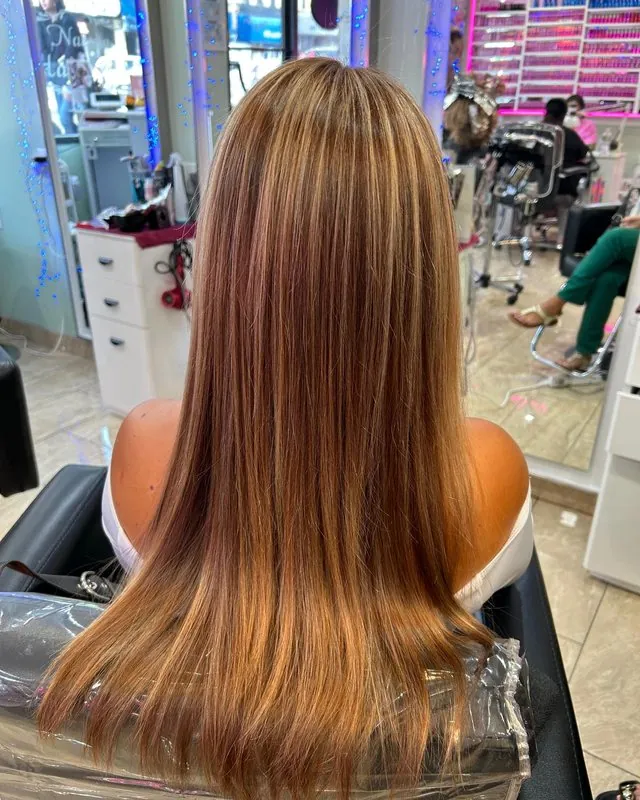
Balayage is the word clients bring in on their phones more than any other, and the one most people cannot define. It is not a color. It is a way of putting lightener on the hair.
Balayage is hand painted highlighting: the colorist sweeps lightener onto the surface of selected sections, heavier toward the ends and lighter toward the root, with no foils and no hard starting line. Because the lightest pieces sit away from the scalp and blend into your natural color, it grows out without a stripe and needs a refresh every three to four months instead of every six to eight weeks. Here is how it is done, how it compares with highlights and ombre, and what to expect at our Astoria hair salon.
What balayage means and what it looks like
Balayage comes from the French word for sweeping, and that is the whole technique: lightener is swept onto the hair by hand, in soft vertical strokes, so the result looks like hair that has been in the sun all summer. The brightest pieces are at the ends and around the face, the mids are blended, and the roots stay close to your natural shade.
Up close, a good balayage has no visible pattern. There are no even stripes, no line where the color starts, and no two pieces exactly alike. From a distance it reads as dimension rather than as highlights, which is why people call it natural even when the ends are several shades lighter than the root. On brown hair it usually lands as caramel, honey or soft blonde ends; on blonde hair it adds brightness and depth.
How balayage is done at the chair
The colorist sections the hair, picks up a thin slice, and paints lightener onto the outer surface with a brush or by hand, saturating the ends and feathering it out as the stroke moves up toward the root. The piece is laid on a board or a strip of film so it does not touch the hair underneath, and the next slice is painted the same way. No foils are folded, so the lightener processes in the open air at a gentler pace.
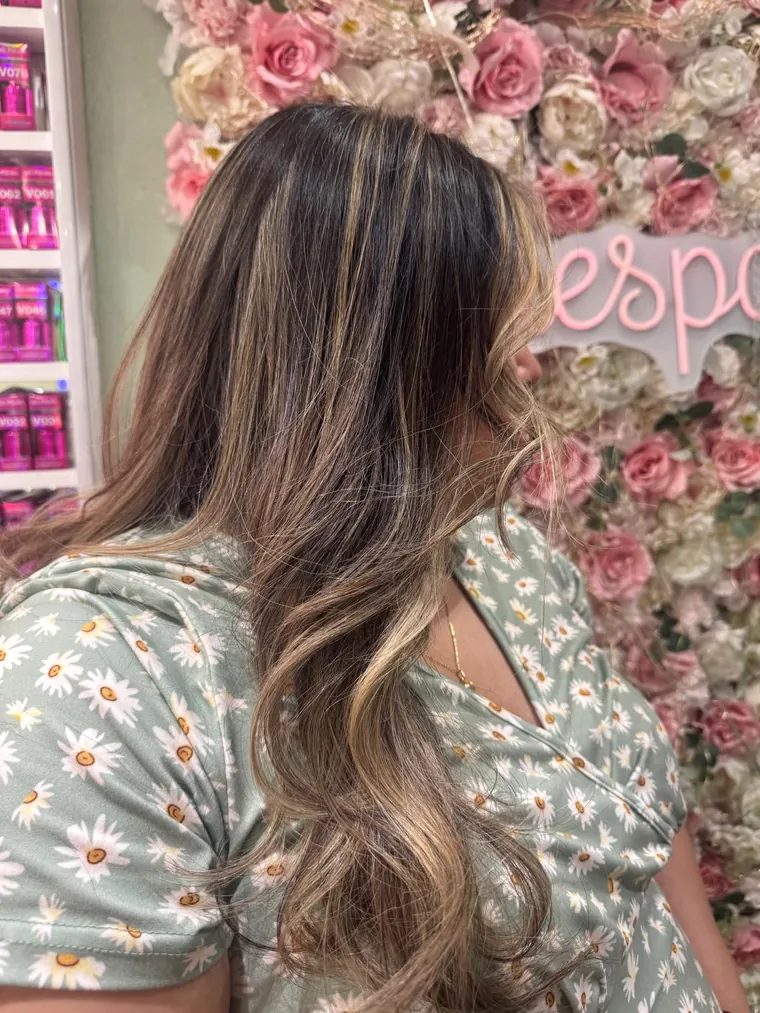
Once the hair has lifted to the right level, it is rinsed and almost always toned or glossed. The toner turns raw lightened hair into the caramel, beige or ash shade you asked for, and it is the step that separates a soft balayage from a brassy one. A cut and blowout usually finishes the appointment so the colorist can see the placement on the finished shape.
Balayage vs highlights: why it grows out softer
Traditional highlights are woven out with a tail comb, painted root to end and sealed in foil. The foil traps heat, so the hair lifts faster and brighter, and the lightener goes right up to the scalp. That gives a clean, even result on day one, and a visible line of regrowth by week six to eight, because the lightest part of every piece starts at the root.
Balayage starts the lightener below the root and builds toward the ends. As your hair grows, the new growth simply extends the darker section you already had, and the blend moves down with it. There is no stripe to chase. Most clients refresh at 12 to 16 weeks, and some go longer with just a gloss in between.
| Balayage | Foil highlights | |
|---|---|---|
| How it is applied | Painted by hand, open air | Woven and sealed in foil |
| Where the lightest color sits | Mids and ends, away from the root | Root to end |
| Regrowth line | None visible | Visible at 6 to 8 weeks |
| Refresh | Every 12 to 16 weeks | Every 6 to 8 weeks |
| Brightness at the root | Low | High |
| Best for | Soft, lived in dimension | Overall brighter, even blonde |
If you want to be noticeably blonder at the root, ask about full head highlights or a mix of both: foils for brightness at the top, balayage painted through the ends for softness.
Ombre, sombre, babylights and balayage
These names get used interchangeably online and they are not the same thing. Balayage is a technique. Ombre is a result: dark at the root fading to a clearly lighter end, with an obvious transition and more contrast. Sombre is a softer ombre. Babylights are very fine foil highlights that mimic the way a child's hair lightens in the sun, and they pair well with balayage for a brighter, finer finish.
When you book: balayage keeps your natural color visible through the length with light woven in, while ombre makes the ends a different color from the root.
What balayage does to your hair
Balayage uses lightener, and lightener opens the cuticle and removes pigment. That means some dryness and some loss of strength in the painted pieces, more on dark hair that has to lift several levels and less on hair that is already light. It is still gentler than foils because the lightener processes slowly in open air without trapped heat, and because it is painted on fewer pieces, mostly away from the scalp.
Two things keep it healthy. The first is the colorist choosing the right developer strength and not over processing to chase a brighter blonde in one sitting; on very dark hair a soft caramel that becomes blonde over two visits is better than a fried result in one. The second is a bond building treatment during and after the service, which helps the hair hold its structure through lightening.
How much balayage costs and how long it takes
Balayage is priced as its own service on our hair menu, which has 20 services starting from $35. It costs more than a single process color, which is $75, because it takes more time and skill, and the total depends on how much hair you have and how far it has to lift. A haircut and blowout is $55 if you want the shape refreshed in the same visit, and glosses, highlights and color correction are also on the menu.
Plan on two to four hours for a first balayage and less for a refresh, where only the mids and ends are repainted. Because the appointment is long, book early in the day; the last hair appointment is 4pm Monday to Saturday.
- Visit 1: full balayage, toner, cut and blowout.
- Weeks 6 to 8: a gloss to refresh the tone, no lightener.
- Weeks 12 to 16: a balayage refresh on the mids and ends, toner.
- Repeat, roughly three balayage visits a year.
Is balayage better than foil highlights? The downsides
Better for softness, grow out and time between visits, yes. Not better for everything. Balayage does not get hair as bright as foils in one session, especially near the root, because open air processing lifts less than foil. On very dark hair, a pale blonde balayage usually takes two visits a few months apart.
It is also the technique where skill shows most. Balayage is freehand, and a rushed one looks patchy. Bring two or three photos of what you want to the consultation.
How to care for balayage between visits
Wash less often and in cooler water, because every wash fades toner a little. Use a sulfate free shampoo made for color treated hair, and once a week swap in a purple or blue shampoo if your blonde pieces start to warm up. Deep condition the lightened ends weekly; they are the oldest and driest part of your hair and they carry the color.
Use a heat protectant every time you blow dry or iron, keep irons on a medium setting, and cover the hair at the beach and in the pool, since sun and chlorine fade and brass the ends fastest. A gloss at six to eight weeks is the cheapest way to make balayage look fresh without any lightener at all.
Book balayage in Astoria
Naespa Nails & Beauty is at 32-44 Steinway St in Astoria, Queens, about two minutes on foot from the Steinway St station on the M and R, with free street parking nearby. Hours are Monday to Friday 9am to 8pm, Saturday 9am to 7pm and Sunday 11am to 6pm, with the last hair appointment at 4pm Monday to Saturday. Call (347) 894-6190 with questions.
Balayage, highlights, glosses and color correction are done by licensed stylists with professional grade products. Because a first balayage is a long appointment, it is best to book online and bring your photos. The full hair menu is on the Naespa services and prices list.
Questions readers ask
Can balayage be done on dark brown or black hair?
Yes. On dark bases it usually lands as caramel or honey on the first visit, and a lighter blonde takes a second session a few months later so the hair stays healthy.
Does balayage need toner?
Almost always. Lightener leaves the hair warm and raw; the toner or gloss sets the final shade, whether that is beige, ash or caramel, and it is refreshed every six to eight weeks.
Can I get balayage on short hair?
Yes, on anything past the chin. On a bob or lob the colorist paints shorter, finer pieces so the blend still has room to fade from root to end.
Is balayage less damaging than highlights?
Generally, yes. It uses lightener on fewer pieces, mostly away from the scalp, and processes in open air without foil heat. It still lightens the hair, so moisture and a bond treatment matter.