
Partial vs Full Highlights: Where the Foils Go and What It Costs
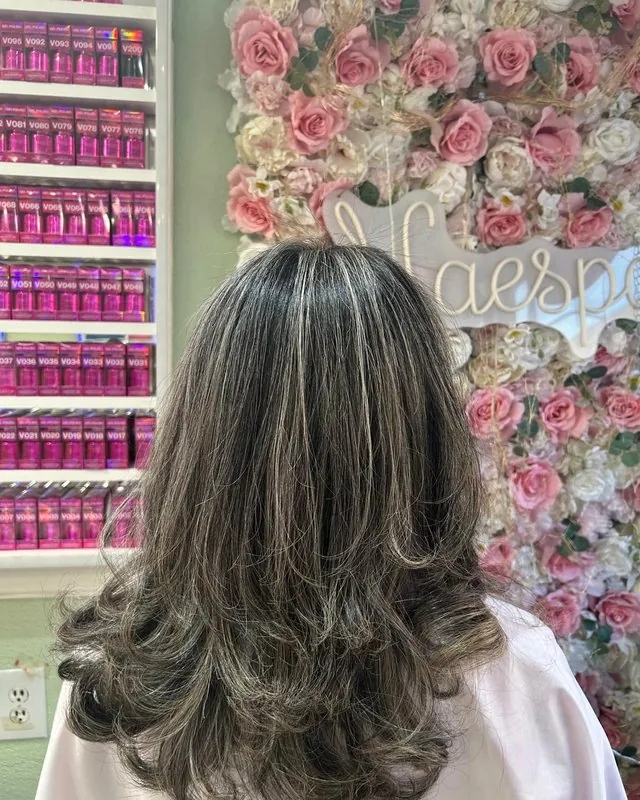
Partial or full is the first question on any highlight booking, and most people guess. The difference is not how blonde you get. It is which parts of your head get foils, and that changes the look, the time in the chair, the price and how often you come back.
Partial highlights, also called a half head, put foils through the top of the head and around the face, the hair you see when it is down. Full highlights, a full head, foil every section from the nape to the crown, so the color is everywhere, including underneath and when your hair is up. Partial is for dimension and a refresh; full is for an overall change in brightness. Here is where the foils go in each, who each suits, what it costs at our hair salon in Astoria, and how to decide.
The quick answer and a decision guide
Choose partial if you want to look lighter and more dimensional without changing your overall color, if you wear your hair down most of the time, or if you are refreshing highlights you already have. Choose full if you want to be noticeably blonder all over, if you wear your hair up often and want the underneath to match, or if you are doing highlights for the first time on dark or solid colored hair.
- Want a brighter frame around the face and some sun on top: partial.
- Want to go from brunette to a blonde you can see from across the room: full.
- Have highlights from three months ago that need a refresh: partial.
- Have grown out, solid, one color hair: full for the first visit, then partials.
- Ponytail or bun most days: full, so the underneath is not a different color.
- Fine hair that you want to look thicker: partial, which keeps depth underneath.
Both are done with foils and both are finished with toner. Most regular clients alternate: a full head once or twice a year and partials in between.
Where the foils go in a partial highlight
A partial covers the top section of the head, the part that would be visible if you drew a line from the top of each ear over the crown, plus the hairline around the face. The colorist weaves out fine or medium slices from that section, paints each from near the root to the end and folds it in foil. The sides below the ear line and the back under the crown are left natural.
The result is light where the eye lands: the part, the crown, the pieces that fall around the face. Underneath stays your natural color or your previous highlights, which adds depth and makes the top look brighter by contrast. When the hair is down it reads as a full set of highlights. When it goes up in a ponytail, the underneath shows as darker, which some people like and some do not.
Variations
A mini or face frame partial foils only the hairline and the part, the quickest refresh there is. A standard partial is the top and sides to the ear. Some colorists also add a few foils just below the crown so the line between highlighted and natural hair is softer. Ask which one your salon means by partial, because the word is used loosely.
Where the foils go in a full highlight
A full highlight foils the whole head. The colorist starts at the nape, works up the back in horizontal sections, then does the sides and finally the top and hairline. Every section gets the same weave pattern, so the brightness is consistent whether the hair is down, half up or in a bun. There is no darker layer underneath.
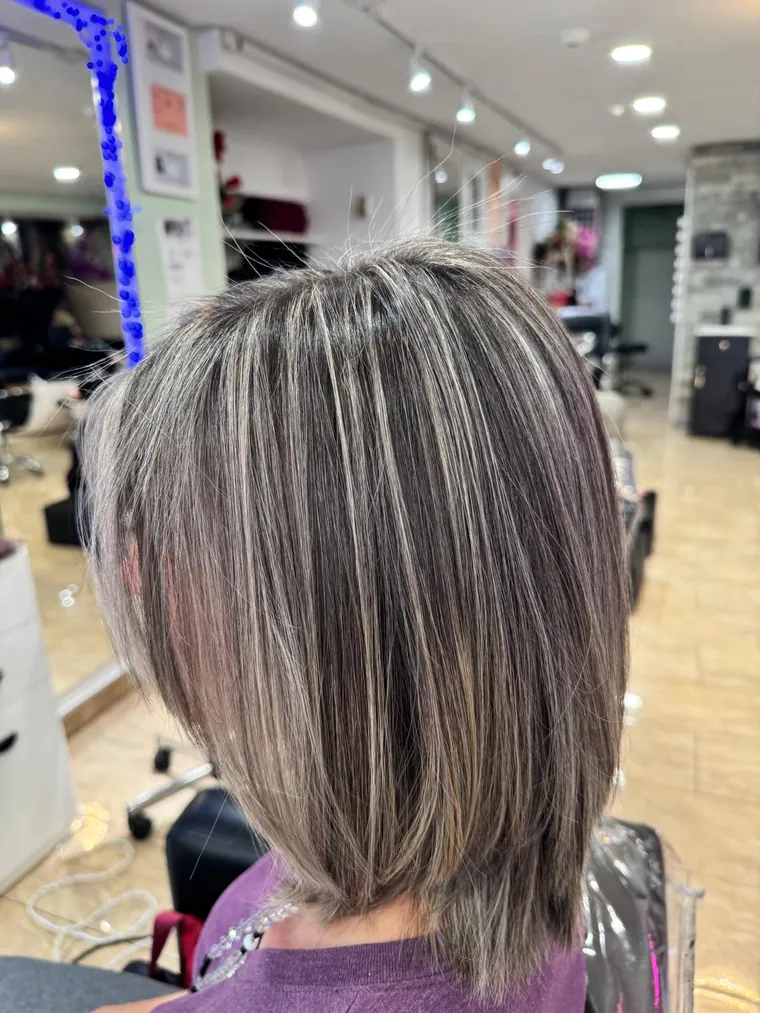
Because the foils reach the nape and the underneath, a full head changes your overall color level. Medium brown with a full head of blonde foils reads as light brown or dark blonde from a distance; the same hair with a partial reads as brown with blonde pieces. That is the real difference people are picking between.
Variations
A full head can be fine and soft, using many thin foils for a blended look, or chunkier and higher contrast. It can be mixed with lowlights, darker foils placed between the light ones, to keep dimension when the whole head is being lightened. On very dark hair a full head is usually done in two visits so the hair is not over processed.
Who each one suits and what to expect
Partial highlights
Partials suit anyone who wants to look lighter without being blonde, anyone maintaining a full head from a previous visit, and anyone with a shorter window of time. They also suit fine or thin hair, because leaving the underneath darker creates shadow that makes the top look fuller.
What to expect: a shorter appointment, fewer foils, lightener on less of your hair and so less overall stress on it, and a result that is brightest at the face and the part. A toner or gloss over the whole head at the end evens the tone so the highlighted and natural sections sit together. A cut and blowout usually finishes the visit so the colorist can see the placement on the finished shape.
The limit of a partial is that it cannot change your overall color. If you keep asking for a partial and wondering why you are not blonder, the answer is that half your hair has never seen lightener.
Full highlights
Full highlights suit anyone making a real change: brunette to blonde, solid color to dimensional, grown out color to fresh. They suit people who wear their hair up, people with thick hair where a partial disappears, and anyone who wants the brightest possible result from foils.
What to expect: a long appointment, often two to three hours or more depending on length and thickness, lightener on every section, and a toner at the end that sets the shade across the whole head. Because the lightener reaches the nape and the root all over, the grow out is more visible and comes sooner than with a partial or with balayage. A bond building treatment during the service helps the hair hold its strength through a full head.
On dark or previously dyed hair, a full head of blonde is usually a two visit plan. The first visit gets the hair to a warm blonde, the second pushes it cooler or brighter eight to twelve weeks later.
Time in the chair and what it costs
Half head and full head highlights are separate services on our hair menu, which has 20 services starting from $35. The full head costs more because it uses roughly twice the foils and twice the time. Both cost more than a single process color, which is $75, because every foil is placed by hand. A haircut and blowout is $55 if you want the shape done in the same visit.
| Partial (half head) | Full head | |
|---|---|---|
| Where the foils go | Top of the head and hairline | Nape to crown, every section |
| Foils, roughly | Half as many | Twice as many |
| Time in the chair | About 1.5 to 2 hours with toner | About 2.5 to 3.5 hours with toner |
| Changes overall color | No | Yes |
| Visible when hair is up | Underneath stays darker | Even all over |
| Refresh | Every 8 to 12 weeks | Every 6 to 10 weeks, or partials between |
| Price on the menu | Half head highlights | Full head highlights |
Times are estimates and depend on length, thickness and how light you are going; a first full head on dark hair runs longest. Because of that, full heads are booked early in the day. The last hair appointment is 4pm Monday to Saturday. Current prices for full head highlights and the half head are on the hair menu.
How maintenance and grow out differ
Foils are painted close to the root, so both partial and full highlights show regrowth. The difference is how much of your head is growing out. With a full head, every section has a line at the root by week six to eight, and the whole head needs attention. With a partial, only the top is growing out, and since the underneath was never lightened, the regrowth is less obvious.
A sensible year for someone who wants to stay highlighted looks like this:
- Visit 1: full head highlights, toner, cut and blowout.
- Week 6 to 8: gloss to refresh the tone, no lightener.
- Week 10 to 12: partial highlights on the top and hairline, toner.
- Week 18 to 20: gloss.
- Week 22 to 24: partial again.
- Month 9 to 12: full head again to reset the underneath, then back to partials.
That is roughly one or two full heads and two or three partials a year, with glosses between. If you want fewer visits still, ask about balayage, which paints the light lower on the hair and refreshes every 12 to 16 weeks.
Hair health matters more than which one you pick
Highlights use lightener, and lightener removes pigment by opening the cuticle. Every foil takes some strength out of the hair inside it. A full head puts lightener on all of your hair; a partial puts it on about half. That is the single biggest health difference between them, and it is why a colorist may steer someone with fragile, over processed or very fine hair toward partials, or toward a full head done over two visits.
Three things protect the hair regardless of which you choose. A bond building treatment in the lightener and after. A developer strength chosen for your hair rather than for speed. And honest timing: eight to twelve weeks between lightening sessions, with glosses in between instead of extra lift. If your hair is already compromised from box dye or old highlights, color correction may need to come first, and that is on the menu too.
At home, wash less often in cooler water, use a sulfate free shampoo for color treated hair, swap in a purple shampoo once a week if the blonde warms up, deep condition weekly, and use heat protectant on every blow dry.
Full vs partial vs the other options
Highlights are one way to add light. Depending on what you want, another service may get you there with less time or less upkeep.
- Balayage: hand painted, no foils, light sits lower on the hair. Softer, grows out without a line, refresh every 12 to 16 weeks. Less bright at the root than foils.
- Baby lights: very fine foils for a subtle, sun lightened effect. Can be partial or full. More foils and more time than standard highlights, softer result.
- Single process color at $75: one shade all over, no dimension, covers gray. Often combined with a partial for depth.
- Gloss: tone and shine only, no lightener. The cheapest way to refresh any of the above.
- Lowlights: darker foils added to over highlighted hair to bring dimension back.
Bring two or three photos to the consultation. A colorist can tell in a minute whether the picture is a partial, a full head, balayage or a mix, and whether your current hair can get there in one visit or two.
Book highlights on Steinway Street
Naespa Nails & Beauty is at 32-44 Steinway St in Astoria, Queens, about two minutes on foot from the Steinway St station on the M and R, eight minutes from the Broadway N and W station, with free street parking nearby. Hours are Monday to Friday 9am to 8pm, Saturday 9am to 7pm and Sunday 11am to 6pm, with the last hair appointment at 4pm Monday to Saturday. Call (347) 894-6190 with questions.
Highlights, baby lights, balayage, glosses and color correction are done by licensed stylists with professional grade products. A full head is a long appointment, so book online early in the day. The half head, full head and every other color service are priced on our full menu of prices.
Questions readers ask
Is a half head highlight the same as partial highlights?
Yes. Half head is the menu name for a partial: foils through the top of the head and the hairline, with the sides below the ear and the back left natural.
Do partial highlights cover the back of my head?
No. A partial stops at the crown and above the ears. If you wear your hair up often and want the back to match, book a full head.
Can I alternate full and partial highlights?
That is the most common plan. A full head once or twice a year resets the underneath, and partials every 8 to 12 weeks keep the top and face bright between.
Will partial highlights show when my hair is in a ponytail?
The top and the pieces around your face will be light and the underneath will be your natural color. Some people like the contrast; if you do not, a full head is the fix.
Which is better for a first time, partial or full?
If you are starting from solid or dark hair and want a visible change, full. If you only want brightness at the face and on top, partial. Either way, bring photos so the colorist can match the picture to the right service.