
How to Remove Dip Powder Nails Without Filing Your Nail Thin
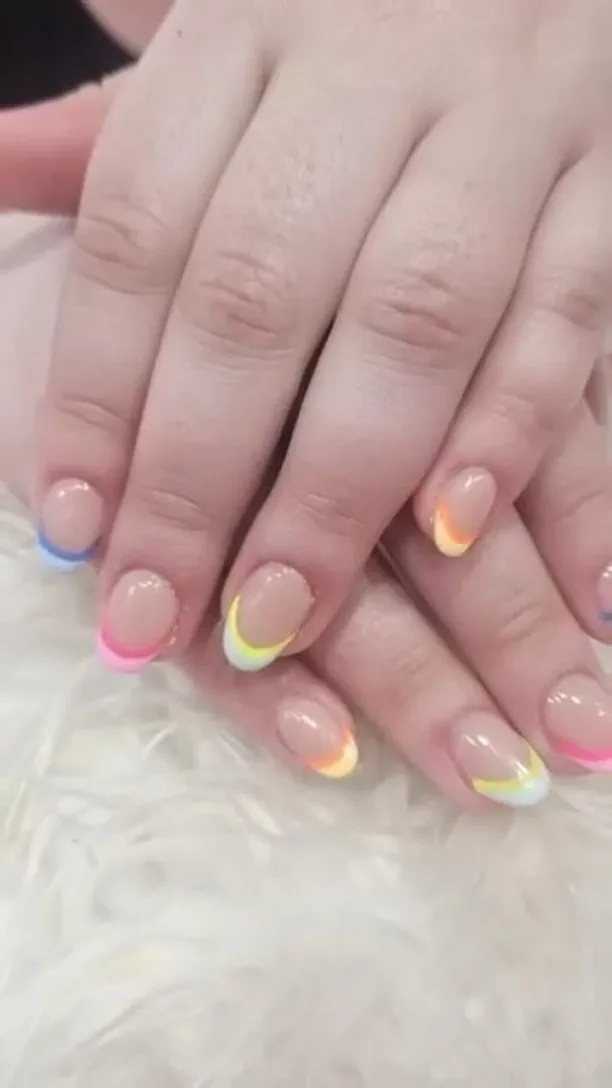
Dip powder is easy to wear and awkward to take off, because the resin that holds it is a glue. People who say dip wrecked their nails almost always peeled it, or filed through it to the plate to save twenty minutes.
To remove dip powder nails safely, file the shine off the top coat, soak each nail in acetone under foil for fifteen to twenty minutes, push the softened powder off with a wooden stick, give anything stubborn a second short soak, then buff lightly and oil. At Naespa in Astoria the same removal takes about ten minutes of soaking because the shell is thinned with an e file first, and a fresh dip set at $50 can go on right after.
Why you cannot peel dip powder off
Dip resin is a cyanoacrylate, the same family as nail glue. It bonds into the top layers of the nail plate. When you peel a dip nail, those layers come with it, and the nail underneath is thinner and will peel on its own for weeks. Acrylic damage works the same way, as our guide to whether acrylic nails are bad for you explains.
The other common mistake is filing through the whole shell with a coarse file or an e file set too high. A file cannot tell where powder ends and nail begins, and the last layer of dip is the same color as the nail under it. Thinning the shell is fine; removing it by file alone is not.
Two smaller mistakes finish the list. Scraping with a metal pusher gouges the softened plate. And rushing the soak, then prying off what is left, is peeling by another name. The rule is simple: if it does not slide off under light pressure from a wooden stick, it needs more acetone and more time.
When to remove dip: reading the signs
Dip is ready to come off at three to four weeks, or sooner if it is lifting, cracked or chipped. Leaving it longer does not hurt the nail, but the set gets harder to remove and more likely to catch and tear.
- Grow out. A gap of a few millimeters at the cuticle means the set has done its month. Dip cannot be filled, so the gap is the signal.
- Lifting. A cloudy edge at the base or a side where the shell has separated from the nail. Water gets in there; remove within days, not weeks.
- A crack across the nail. The shell has split and the nail under it is at risk of tearing with it. Tape a sharp edge and remove or repair soon.
- Chips at the free edge. Cosmetic, but a chipped shell is thicker at the edges and harder to soak evenly.
- Pain, redness or a dark patch under the shell. Take that nail off the same day so it can dry, and have a technician or a doctor look at it.
If the set still looks good at week four, there is no harm in riding it to week five. The soak will take a little longer, that is all.
Tools and supplies
Everything on this list is from a drugstore. The electric file and the removal clips sold online are optional; a hand file and foil do the job.
- Pure acetone. Acetone free remover does not dissolve dip resin.
- A coarse nail file, around 100 to 150 grit, for the top coat.
- Cotton pads cut to the size of a nail.
- Aluminum foil in squares, or reusable soak clips.
- A wooden orange stick. Not metal.
- A fine buffer for the last film.
- Petroleum jelly or a thick balm to protect the skin around the nail.
- Cuticle oil and hand cream for afterward.
- A towel for the table and a small bowl of warm water to rest the wrapped hand on, which speeds the soak.
Open a window before you start. Acetone fumes in a closed bathroom are unpleasant within ten minutes.
Safe soak off, step by step
Work one hand at a time so the other hand can manage the foils. Do not skip the filing step; the top coat is sealed against acetone and the soak only works where the seal is broken. It is the same order used for soaking off acrylic nails.
1. File the top coat
File the surface of each nail until the shine is gone everywhere, including right at the base and the free edge. You are roughing the surface and thinning the shell a little, not filing to the nail. Brush off the dust.
2. Protect the skin
Rub balm into the skin around each nail. Acetone dries skin fast and the balm keeps your fingertips from going raw over the soak.
3. Soak and wrap
Soak a cotton piece in acetone, press it on the nail and wrap the fingertip in foil, closing it tightly at the base. Do all five on one hand. Rest the hand on a warm towel or over a bowl of warm water and wait fifteen to twenty minutes.
4. Push, do not scrape
Unwrap one finger. The dip should look swollen and chalky and should slide off under light pressure from the wooden stick, working from the cuticle toward the edge. Whatever does not slide, leave. Rewrap it with a fresh pad for five to ten more minutes.
5. Second soak for the last layer
The base layer is the thinnest and the most bonded. Give it its own short soak rather than scraping. Most of it will slide off; a faint film is fine.
6. Buff and oil
Buff the film away with the fine buffer in a few light passes. Wash your hands, oil every cuticle and work cream into the hands. Then do the other hand.
Tips for easier removal
After the first soak off, people find shortcuts. These are the ones that help without costing nail.
- File more before you soak. The more shell you thin with the file, the shorter the soak. Stop when the color starts to look thin near the cuticle.
- Warm the acetone. Set the bottle in a bowl of warm water for a few minutes first, or rest the foiled hand on a warm towel. Warm acetone works noticeably faster. Never heat it on a stove or in a microwave.
- Use fresh pads for the second soak. Acetone saturated with dissolved powder slows down.
- Keep the length short before you start. A short free edge means less shell and less to catch on the foil.
- Wrap tightly. Air in the foil lets the acetone evaporate and the nail dries out mid soak.
- Keep the top coat gel free next time if you plan to remove at home. A gel top coat over dip is sealed harder and needs extra filing, much like removing Gel X nails.
What does not help: soaking the whole hand in a bowl of acetone, which strips all ten fingers and still needs the seal broken first; and the dental floss trick, which is peeling with a tool.
Aftercare after removal
A nail that has just lost its dip is dry and a little thinner. A week of simple care brings it back.
- Oil the cuticles twice a day. The acetone pulled the moisture out and oil returns it.
- Keep the edges short and smooth so they do not catch and peel.
- Gloves for cleaning. Detergent on a bare nail is what starts peeling.
- Do not buff again to make the surface look smooth. One light pass at removal is enough.
- If you want color while the nail rests, a regular manicure at $21 gives a tidy edge and a light coat without a lamp.
White patches and ridges are surface dryness and grow out. A nail that is sore, soft or discolored and not improving within a few days should be seen by a dermatologist.
Salon removal at Naespa
In the salon, the shell is thinned with an e file in a couple of minutes, with a light touch that never reaches the plate. The soak that follows is about ten minutes instead of twenty, and the technician pushes the rest off with a wooden stick and buffs the plate smooth.
The technician then looks at each nail. A thin spot gets a finger repair at $10; a peeling edge is trimmed short. If you are going into a new set, prep continues from there and the dip goes on in the same sitting. Tools are UV sterilized between clients and the sanitation is hospital grade, which matters most at the moment the nail is bare. Removal is listed as enhancement removal on our services and prices list.
Let the salon do it rather than soaking at home when the set is lifting with anything dark under it, when your nails were thin before the set, when there is a gel top coat or art sealed over the dip, or when you do not have the forty minutes to do it properly.
Book a soak off on Steinway Street
Naespa Nails & Beauty is on Steinway Street in Astoria, two minutes from the Steinway St station on the M and R. The salon is open seven days, Monday to Friday 9am to 8pm, Saturday 9am to 7pm and Sunday 11am to 6pm, with the last nail appointment at 6pm Monday to Saturday.
Walk ins are welcome for a removal on its own. For removal plus a fresh dip set, book online so the time is held, and see our guide to dip powder nails for colors and prices.
Questions readers ask
How long does it take to soak off dip powder at home?
About forty minutes for both hands: a few minutes of filing, fifteen to twenty minutes in acetone, then a short second soak for the base layer. The salon takes about half that with an e file.
Can I remove dip powder without acetone?
Not safely. The resin only dissolves in acetone. Filing the whole shell off or peeling it are the two methods that thin the nail.
Why is my dip powder not coming off in acetone?
Usually the top coat was not filed through, so the acetone cannot reach the resin, or the foil was loose and the acetone evaporated. File more, use fresh pads and wrap tightly.
Can I get a new dip set right after removing the old one?
Yes. If the nails are not sore or peeling, a new set goes on in the same appointment, which is how most clients do it.