
What a Russian Manicure Is, Step by Step on Steinway Street
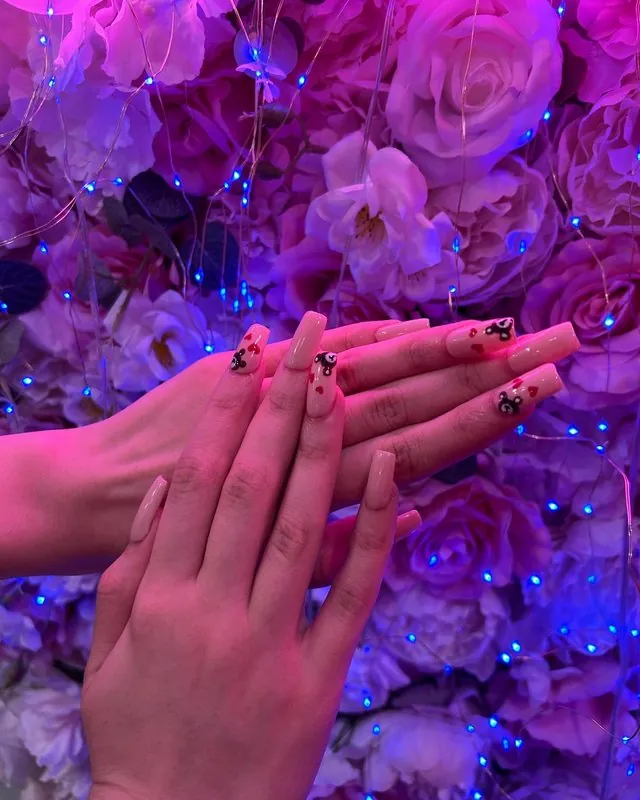
Ask three people what a Russian manicure is and you will hear three answers: a dry manicure, a drill manicure, a manicure that lasts a month. All three are partly right. The name covers a way of preparing the nail, not a brand or a polish.
A Russian manicure is a dry manicure in which the technician uses an electric file with small bits to lift and remove the dead cuticle and the thin skin on the nail plate, then applies gel very close to the skin. The result looks cleaner and grows out slower than a standard gel manicure. At Naespa in Astoria a Russian gel manicure is $65 against $40 for a regular gel manicure, and this post explains where that difference goes.
What makes a manicure Russian: dry prep and the e file
Two things make a manicure Russian. The nail is never soaked, and the cuticle is worked with an electric file instead of nippers and a pusher.
A standard manicure starts with a bowl of warm water. Soaking softens the cuticle so it can be pushed back and trimmed, but it also swells the nail plate with water. When the nail dries out again under gel, it shrinks a little, and that shrinking is one reason polish lifts at the edges within a week.
Dry prep skips the bowl. The technician works on the nail as it is, so the plate stays the same size before and after the service. The e file, which is a handheld rotary tool that takes small bits, does the detailed work. A tapered bit lifts the cuticle, a fine bit cleans the dead skin off the plate, and a soft bit buffs the surface. The bits are small enough to follow the curve of the nail fold, which is where hand tools leave material behind.
Why the e file matters
Hand tools cut. An e file abrades. Done correctly, abrasion removes only the dead, translucent layer of skin that sits on the nail and leaves living tissue alone. That is the whole trick: clear the nail right up to the living fold without cutting the fold, so gel can be laid under the edge of the skin.
Step by step at Naespa
A Russian gel manicure in the salon follows the same five steps each time. Here is what you will see from the chair.
Step 1: Remove the old gel
If you are wearing gel, it comes off with the e file first. The technician thins the old color to a whisper and leaves the last layer, which protects the plate. Nothing is soaked.
Step 2: Lift and clean the cuticle
A tapered bit runs along the fold to lift the cuticle away from the plate. A fine bit then removes the dead skin that was hiding under it. You should feel vibration and warmth, never pain. This is the slowest step and the one that sets the look.
Step 3: Shape and buff
The free edge is shaped with a hand file. The plate is buffed lightly so the base coat has something to hold.
Step 4: Base, color, top coat
Base coat is applied in a thin layer that is pushed under the lifted fold with a small brush, then cured. Color goes on in two thin coats, each cured, then top coat. Because the skin was cleared first, the color runs right to the fold with no gap.
Step 5: Oil and finish
Cuticle oil goes on last. The oil matters more after dry work than after a soak, because the skin has nothing else to drink.
Russian vs regular manicure
The two services share a goal and little else. The table shows where they split, using the salon's own menu prices.
| Point | Regular gel manicure | Russian gel manicure |
|---|---|---|
| Prep | Soak in warm water | Dry, no water |
| Cuticle method | Pusher and nippers | E file with small bits |
| Gel placement | Stops short of the skin | Tucked under the fold |
| Wear time | About two weeks | Three to four weeks |
| Time in chair | Shorter | Longer, mostly cuticle work |
| Price at Naespa | $40 | $65 |
If you want color fast and plan to change it in ten days, a regular gel manicure is the better buy. If you want a set that still looks fresh at the three week mark, the extra $25 pays for itself in skipped visits.
Is it legal in New York, and what licensed techs do differently
In New York, nail specialists are licensed by the Department of State, and the line the technique has to respect is the one every state draws: dead skin can be removed, living tissue cannot be cut. What is not allowed anywhere in the United States is cutting living tissue, and that is where the technique gets its bad name.
Every state licenses nail work and every state draws a line at the living skin. Rules differ in the details. Some states restrict how cuticles may be trimmed and a few have looked hard at e file cuticle work, so you will read online that the technique is banned in places. In New York, licensed nail specialists may use electric files, and the dead cuticle on the plate is fair game. The eponychium, the living fold at the base of the nail, is not.
What a licensed technician does differently comes down to three habits. The bit never touches the living fold; it works on the plate and under the lifted edge of the dead cuticle. The bits are sterilized between clients, which at Naespa means UV sterilized tools and hospital grade sanitation for everything that touches you. And the technician stops when the plate is clean rather than chasing a perfect edge. Over filing to make the nail look flatter is the mistake that thins nails, and it is the mistake a trained hand avoids.
If a shop offers a Russian manicure in fifteen minutes, or the person working on you is not licensed, that is the time to walk out. The speed comes from skipping the care.
Why it costs more
A Russian gel manicure costs more because it takes longer, needs trained hands and uses tools that have to be bought and sterilized. At Naespa it is $65 next to $40 for a regular gel.
Time is the main cost. The cuticle work that a soak and a pusher finish in a few minutes takes a good part of the appointment with an e file, because the technician is clearing skin a millimeter at a time. The salon is paying for that chair time whether the service is called Russian or not.
Training is the second cost. Using an e file close to living skin without touching it is a skill that takes months to learn. Technicians who have it are harder to find and are paid for it.
Tools are the third. The bits that do the work are consumables, and each one needs full sterilization between clients, which adds equipment, time and tracking to every service. The bits for cuticle work also wear out and get replaced.
What you get for the extra $25 is a set that looks painted on from the first day, grows out with no gap for longer, and does not need a return visit at the two week mark. Clients who switch rarely switch back for everyday color.
How long it lasts and why
A Russian gel manicure usually wears three to four weeks before the grow out shows, against about two weeks for a soaked gel manicure.
The longer wear comes from three things. The plate was not swollen with water, so it does not shrink under the gel. The dead skin that causes lifting at the base was removed, so the gel is bonded to the clean plate instead of to a layer of skin that will shed. And the color starts right at the fold, so the first week of growth is hidden under the skin's edge rather than showing as a bare line.
What shortens it is the same as for any gel: long soaks in hot water, picking at the edge, using the nail as a tool, and skipping cuticle oil. Oil keeps the skin at the fold soft so it does not pull at the gel as the nail grows. If your nails bend or break under gel, our guide to builder gel manicures covers a stronger base.
How it is removed, and why you should not pick it
Russian gel is removed with the e file, by thinning the color down to the base layer and buffing the rest, with no acetone soak. Do not pick or peel it, because gel that bonded this well takes the top layer of the nail plate with it. The same goes for dip, as our guide to taking dip powder off safely explains.
Removal by file is the method of choice because acetone softens the plate and the skin around it, which is the opposite of what the dry method was protecting. A technician works the old color down in passes, keeps the last thin layer of base on the plate, and preps the new set on top of it. The nail never goes bare, which is part of why the nail stays strong across repeated sets.
At home, if you must take it off, soaking is the safer option. File the shine off the top coat, soak a cotton pad in acetone, wrap each nail in foil for fifteen minutes and push the softened gel off with a wooden stick. Rinse, buff lightly and oil. What you should never do is lift a corner and pull; the gel is stronger than the plate under it.
If a nail is thin or sore after a removal, a finger repair at the salon is $10 and a regular manicure is $21, which is a cheap way to let a technician look at the plate before the next set.
French and pedicure versions
The dry cuticle method works on toes and takes a French tip well. Naespa lists a Russian gel manicure with French design at $75 and a Russian gel pedicure at $90.
French is the design that shows off Russian prep best. A white tip on a clean, flat plate with color running to the fold looks sharp, and because there is no gap at the base the look stays sharp for longer. The $75 price is the $65 Russian gel manicure plus the design work on the tip.
On the feet, the same e file work clears the thick cuticle and the dead skin that builds up around the big toe, which a soak never fully reaches. The salon offers a Russian gel pedicure at $90, a Russian polish pedicure at $80 if you prefer regular polish on your toes, a Russian polish French pedicure at $90 and a Russian gel French pedicure at $100. Compare that with the standard gel pedicure at $45 and the gap is wider than on hands, because the pedicure prep is more work. Toes that have been done this way stay clean looking for well over a month.
Book a Russian manicure on Steinway Street
Naespa Nails & Beauty is on Steinway Street in Astoria, two minutes on foot from the Steinway St station on the M and R. The salon is open seven days, Monday to Friday 9am to 8pm, Saturday 9am to 7pm and Sunday 11am to 6pm, with the last nail appointment at 6pm Monday to Saturday.
Walk ins are welcome, but a Russian gel manicure takes longer than a regular set, so it is worth reserving the chair. You can book online in a minute or check the Naespa menu and prices for the French and pedicure options above.
Questions readers ask
Does a Russian manicure hurt?
It should not. You feel vibration and some warmth from the bit, and that is all. Sharp pain means the bit has reached living skin, and a trained technician stops before that point.
How often should I get a Russian manicure?
Most clients come back every three to four weeks. Because the old gel is filed down rather than soaked off, there is no reason to leave a gap between sets.
Can I get a Russian manicure if my nails are weak or thin?
Usually yes, and many clients with thin nails do better with it because the plate is never soaked or stripped with acetone. Tell the technician at the start so the buffing stays light.
Can I bring my own color to a Russian manicure?
Ask at the desk. The salon works with professional grade gel that it knows will cure and wear correctly under the fold, which is the point of the service.